$100 US Gift Certificate


108,00 $US
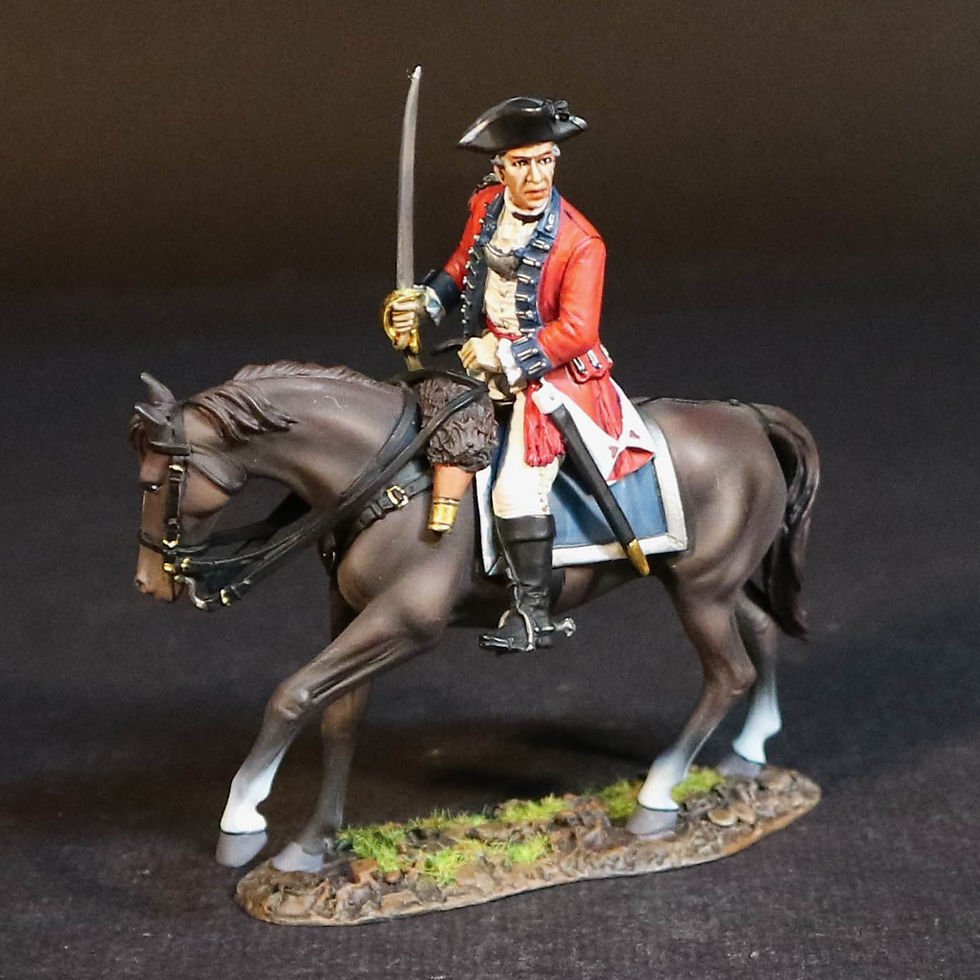
Francis Clerke (1748-1777) the aide-de-camp to General Burgoyne. Clerke was also shot and killed by Morgan’s riflemen as he rode upon the field to deliver orders to Fraser from Burgoyne to fall back, orders that never reached him.
Quantité
Details
Even though the British army had campaigned in Europe and North America in previous recent conflicts, its staff organization at the time was still in the rudimentary stages of development. A commanding general would be able to organize his staff to suit himself, and his inner circle was not a planning staff in the modern sense, but a small organization dedicated to keeping the army supplied in the field and to carrying and supervising the general’s orders in combat.
The English leadership during this period was adequate, many times competent, but seldom brilliant. The first commander in North America, Sir Thomas Gage was relieved after Bunker Hill. His successor, Sir William Howe had a string of battlefield successes to his credit, was respected by his men, but did not have the killer instinct of the true independent commander. The Senior British commanders often failed to support each other when necessary. Howe failed Burgoyne in 1777, which led to Burgoyne’s defeat and surrender at Saratoga.
Also killed during the action was Francis Clerke (1748-1777) the aide-de-camp to General Burgoyne. Clerke was also shot and killed by Morgan’s riflemen as he rode upon the field to deliver orders to Fraser from Burgoyne to fall back, orders that never reached him.
An Aide-de-camp (ADC) is a term derived from a French expression meaning “helper in the military camp”. The Aides de camps, were often younger family members of the generals that they served, social status counted for more than skill in this position. These junior staff officers’ duties included taking their commander’s orders to the units concerned. Originally these officers were detailed from regiments under the general’s command, and therefore wore their regimental uniforms. In 1767 regulations were issued for the uniforms of the Aides de camp to be formalised, and later amended by 1782 for all ADC’s to wear red coats, with blue facings and to wear two gold epaulettes and gold lace. They would also wear riding boots and spurs as they were frequently, if not exclusively mounted when on duty in the field.
Scale: 1/30
Material: Pewter alloy and synthetic fibers
Released Date: June 2026
More Information
| Gender | Men |
| Role | Dead & Wounded |
| Year | Late 18th Century |
| Availabilities | Last Ones Available |