$100 US Gift Certificate


148,00 $US
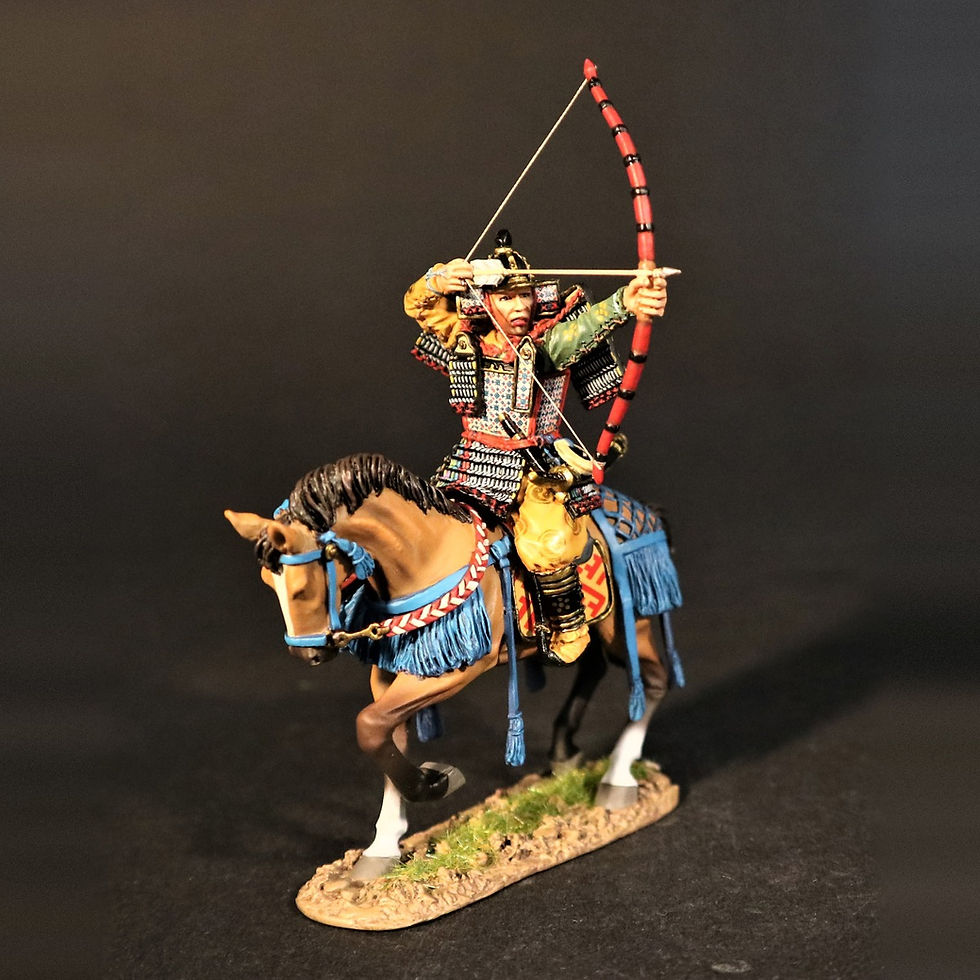
Minamoto was a noble surname bestowed by the Emperors of Japan upon members of the Imperial family who were excluded from the line of succession and demoted into the ranks of the nobility.
Quantité
Details
BANNERS AND FLAGS
The origins of samurai flags trace back to the Heian period when simple banners were adopted for shinobi and retainers. As the Kamakura shogunate consolidated power, banners became official seals promulgated by the shoguns themselves, marking territorial jurisdiction and allegiance.
Battlefied control was obviously difficult between two simularilly dressed armies. Flags were carried into battle by foot soldiers or by mounted men who rode alongside the elite samurai mounted archers. It is generally agreed that the Taira carried red flags and the Minamoto white flags.
Only a few banner forms—and there were many—truly correspond with European styles. There seems to have been no tradition of a free-flying banner connected only at the hoist, as is so common in the West. By far the most common banner style was connected at the hoist and chief to the pole and a crossarm: the nobori. There are two versions of this type of banner which exist: basically square or short rectangular banners, and really longer, narrow ones like the Fūrinkazan. (The long side was always vertical.) These flags could have been made in any size, though sashimono (the flags worn on the back of the armour during the sengoku period) were usually slightly less than one full width of fabric (about one foot to fifteen inches) wide and about three feet long. Those used as standards were usually two or even three full widths (c. thirty to forty-five inches) and twelve or more feet long. Another style, similar in ways to the European gonfalon, has a long narrow strip of cloth hanging from a crossbar. This crossbar could either be rigidly attached to the pole, or hung free from it by cords at either end and tied to the pole. This is one of the oldest forms of Japanese flag.
The 1180–1185 Genpei War between the Minamoto Clan, or Genji, and the Taira Clan, or Heike, was marked by the white banners of the former and the red banners of the latter. These banners were generally depicted as being of this style. The loose, long flapping end was free to fly in the breeze (thus necessitating a pole high enough to keep it from being a nuisance), although some variations had a strip of fabric sewn to the center back like a belt loop, through which the pole passed. Occasionally it was also simply seized around and tied to the pole near the base. It could be of any width (one to six feet) and of any length (three to twenty feet).
Windsock styles were also popular
These flags were then decorated by mon (badges) attributed to the two families. The Taira clan was associated with the mon of a stylised black butterly, and the Minamota clan with a design based on the gentian plant. The banners of Red and white would come to mean much the same to Japanese, as the “blue and Grey” would mean to Americans.
THE MINAMOTO CLAN
Minamoto was a noble surname bestowed by the Emperors of Japan upon members of the Imperial family who were excluded from the line of succession and demoted into the ranks of the nobility.
In the twilight of the Heian period, the Taira controlled the boy Emperor Antoku (the grandson of the powerful Kugyo Taira no Kiyomori) and had effectively dominated the Imperial capital of Heian. They were opposed by their rivals the Minamoto clan (the Genji), which culminated in the Genpei War (1180-1185AD). The five year long war concluded with a decisive Taira defeat in the naval Battle of Dan-no-Ura, which resulted in the deaths of Antoku and Taira leaders. Following the war, the victorious Minamoto established Japan’s first Shogunate in Kamakura.
Scale: 1/30
Material: Pewter alloy and synthetic fibers
Released Date: October 2026
More Information
| Animals | Horses |
| Gender | Men |
| Role | Officers & Leaders |
| Year | Middle Age |
| Celebrities | All Celebrities, Militaries |